






As a frequent traveller, I’ve always found that knowing the intricacies of each destination’s electrical systems can be as crucial as packing the right clothes. If you’re planning a trip to Ireland, it’s paramount to be clued up on their unique plug and socket type – Type G. This three-pronged plug is a common sight across the UK, Malta, Malaysia, and Singapore, and it’s an absolute essential for your Irish travels.
Indeed, ensuring that you have the correct travel plug adapter is essential – not just for convenience, but for safety too. Being equipped with a plug adapter Ireland means staying powered up and connected without a hitch. In Ireland, the power adapter you’ll require is designed for the country’s 230V and 50Hz electrical infrastructure.
So, for a worry-free visit to the Emerald Isle, don’t overlook the seemingly small yet significant details of securing the right Ireland power adapter and electrical plug adapter.
☝️ What plug adaptors are used in Ireland? In Ireland, the most commonly used power adapter type is Type G. This plug, also known as the British plug, has three rectangular pins arranged in a triangular pattern, with the top pin slightly longer than the other two. It is a grounded plug and has a maximum current rating of 13 amps.
Key Takeaways:
Here’s what you’ll learn from reading this article
- Know your plugs: Ireland uses the Type G plug and socket, so come prepared with the right plug adapter Ireland.
- Check your voltages: Ensure your devices can handle Ireland’s standard voltage of 230V and frequency of 50Hz.
- Adapt and conquer: Invest in a travel plug adapter to easily connect your devices while in Ireland.
- Avoid the mismatch: European plugs differ, so don’t expect them to fit into Irish sockets without the right Ireland power adapter.
- Plan ahead: Acquiring the appropriate electrical plug adapter will save you time and trouble upon arrival.
Our Favourite Places in Dublin & Ireland
🍺 GUINNESS STOREHOUSE – Experience the Home of Guinness
🧚 BOOK OF KELLS – Trinity College Library + Ancient Manuscript Tour
🚍 CLIFFS OF MOHER – Full-Day adventure from Dublin to the breathtaking Cliffs of Moher & Galway.
🇮🇪 HOP ON HOP OFF BUS – Dublin City Sightseeing Hop-On Hop-Off Bus Tour
🎟 DUBLIN PASS – Go City All-Inclusive Pass for 40+ top attractions including Guinness Storehouse and Hop-On Hop-Off tours
Understanding Ireland’s Electrical System and Plug Type
In my exploration of Ireland’s unique electrical landscape, I’ve found that arming oneself with knowledge of the local plug and socket conventions is essential, especially for those of us reliant on our electronic devices for navigation, communication, and entertainment. The electricity buzzing through the vibrant green of Ireland flows through a system that may differ significantly from your own country’s – particularly if you’re arriving from outside the British Isles. Let’s delve into the details of the Irish electric standard, ensuring you’re equipped and ready to keep your devices fully charged on your travels.
Peeking into the Type G Plug and Socket
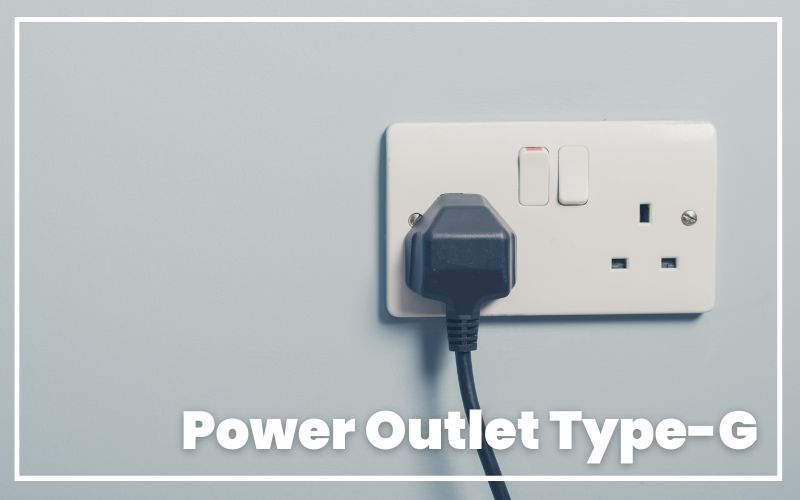
The cornerstone of the Irish electrical system is the type G plug, a robust, three-pin design that ensures safe and secure connections. Renowned for its reliability and safety, it is the universal standard across homes and establishments in Ireland. Here’s a closer look at this plug type:
| Characteristic | Specification |
|---|---|
| Plug Type | Type G – BS 1363 Standard |
| Operational Frequency | 50 Hz |
| Plug Compatibility | Exclusively for Type G plugs |
| Rated Voltage | 230V |
| Pin Configuration | 3 (one vertical, two horizontal) |
| Safety Grounding | Included |
| Amperage Capacity | 13 Amps |
| Pin Shape | Rectangular |
| Load Limit | Maximum 3,000 Watts |
Should you require an Ireland power adapter, keep in mind that your destination is prepared for devices that align with the specifics above, so securing the right adapter could not be more crucial.
Comparing Voltage and Frequency with Your Home Country
An essential step before my travels is comparing the electrical specifications of Ireland with those of my own country. Devices from regions with a different voltage or frequency standard might need an Ireland plug adapter or even a converter for compatibility with the 230 volts and 50 Hz frequency found in Irish sockets. If in doubt, remember to check your devices’ specifications: many modern electronics are dual voltage, meaning they can adapt to a wide range of voltages and frequencies without any adjustment.
Why Don’t European Plugs Fit in Ireland?
The European continent is dotted with a myriad of plug types, predominantly types C and F, which don’t match the type G plug standard of Ireland. This is a classic case of regional diversity in electrical infrastructure. Without the correct travel plug adapter, trying to use a European plug in an Irish socket is akin to fitting a square peg in a triangular hole – utterly futile. When in Ireland, an electric plug adapter is non-negotiable for those carrying appliances from the majority of Europe.
Therefore, as part of travel preparations, I always remind fellow explorers to procure a reliable travel plug adapter to bridge the gap between their device plugs and Ireland’s uniquely shaped sockets, ensuring a trip that’s both energised and hassle-free.
Think You Know Dublin? Discover Even More - 🎉 Sign Up & Win €25!
✨ Get the Best of Dublin Weekends—subscribe for a chance to win a €25 One4all Gift Card every Thursday!
Terms: The One4all Gift Card is accepted in hundreds of stores across Ireland. Not redeemable for cash. By clicking "Subscribe", you accept our Terms of Service and Privacy Policy. You can opt-out at any time by clicking "unsubscribe" at the bottom of the email.
Plug Adapter Ireland: Adapting to Irish Power Needs
When you’re planning a journey to Ireland, it’s not just the majestic landscapes and rich culture that beckon; it’s also the practicalities that need attention. One detail I always emphasise to my fellow travellers is the necessity of an Ireland plug adapter. Especially crucial for those coming from the UK, a UK to Ireland plug adapter ensures that your devices remain charged and functional throughout your stay. It’s the key to a seamless experience, allowing you to indulge in all the technological comforts of home whilst surrounded by unparalleled Irish beauty.
It’s always advisable to check if your electronic devices are rated for Ireland’s local electricity supply of 230V and 50Hz. If they’re not up to spec, my first piece of advice is to look into voltage converters or transformers as a viable solution. Let’s take a moment to reflect on the requirements and specifications that will keep your devices powered and protected:
| Device Compatibility | Action Required | Purpose |
|---|---|---|
| Rated for 230V, 50Hz | Use Ireland plug adapter | For adapting plug shape without converting voltage |
| Not rated for 230V, 50Hz | Use a voltage converter/transformer | To convert voltage to match the electrical system in Ireland |
| Dual voltage appliance (e.g., 110-240V) | No converter needed; type G plug adapter suffices | Designed for international travel |
| Single voltage appliance (e.g., 120V) | Requires voltage converter/transformer | Essential for safe usage in Irish electrical systems |
By understanding whether your appliances are single or dual voltage, you can determine the need for a straightforward plug adapter or possibly a voltage converter. It’s this sort of foresight that can be the difference between an uninterrupted getaway and one fraught with preventable power issues.
And for those curious, the famed type G plug is a constant across Ireland, providing a grounded and secure connection for all your electrical needs. This sturdy three-pin design is the standard by which all appliances must connect, so equipping yourself with this knowledge before embarking is paramount.
Keep this guide close to hand, and when the time comes for your Irish adventure, you’ll be ready to plug in and explore everything the country has to offer, without the worry of whether your devices will maintain their charge. Always remember, a little preparation goes a long way, especially when it comes to staying powered up abroad.
A UK to Ireland Plug Adapter: Is It Necessary?
As someone who frequently traverses the Irish Sea, I understand the apprehensions that come with packing adaptors. Is a UK-to-Ireland plug adapter on your travel checklist? Well, if your electronics arsenal consists of gadgets purchased in the UK, you’ll be pleased to know the commonality in the plug system may save you some packing space.
Navigating the practicalities of electrical systems across borders can be trickier than driving on the opposite side of the road. Luckily for us, the journey between the UK and Ireland is made seamless, at least in terms of plug compatibility. Hence, a specific travel plug adapter is often an accessory you can forgo when visiting the neighbourly green pastures from the UK.
Understanding the Technicalities: Voltage Differences
Nevertheless, it’s only prudent to be attuned to the subtle differences that do exist. When you’re brewing a cuppa in Dublin using your London-bought kettle, remember there’s a slight voltage variation to consider. Ireland operates its electrical devices on 230 volts, marginally less than the UK’s 240 volts. This difference is typically minuscule in the grand scheme, as most of our gadgets are versatile globetrotters, tolerating anything from 100 to 240 volts.
However, it’s a point worth noting for the safety-conscious traveller or for those electronics without auto-switch capabilities. In most scenarios, your devices should work perfectly fine without the need for an Ireland power adapter, but it never hurts to double-check. Ensuring compatibility in terms of voltage and frequency specs means you can relish in the beauty of Ireland worry-free, with fully charged cameras and smartphones at hand.
Travelling Between the UK and Ireland with Electrical Devices
My experience with cross-channel jaunts has revealed that the real charm lies in simplicity. The common Type G plug used across both isles eases the technical burden carried by the modern traveller. Whether you’re off to see the Wild Atlantic Way or revelling in the buzz of London, your arsenal of devices should face no stark adversities. But diligence in assessing your gadgets’ voltage adaptability remains a must-do task prior to setting sail.
For those who plan to travel back and forth frequently, it may be prudent to invest in a travel plug adapter that caters for other European destinations as well. It’s the sort of addition to your travel kit that speaks of foresight and flexibility. Nonetheless, Your UK chargers should couple nicely with Irish sockets, leaving you with one less thing to worry about as you embark on your Celtic adventure.
In sum, while the seas may separate us, when it comes to keeping our devices alive and kicking, the UK and Ireland are pleasantly united by the Type G plug. So, unless you’re venturing beyond these lands, you can leave the Ireland plug adapter off your ‘What to Pack’ list.
Choosing the Right Plug Adapter for Your Devices
Embarking on a trip to Ireland comes with the delightful prospect of indulging in its lush landscapes and historic charm. However, it also necessitates practical travel preparations, particularly concerning electronic devices. Identifying the correct UK to Ireland plug adapter or a universal plug adapter can be the determining factor between device compatibility and inconvenience. Let me guide you through selecting the ideal Ireland power adapter for your travels.
Identifying Single and Dual Voltage Appliances
Firstly, it’s imperative to determine if your beloved gadgets are single or dual-voltage. Dual voltage appliances are marked with ‘INPUT: 110-240V’, indicating their readiness for a global escapade, Ireland included. Simply pair these adaptable devices with a standard travel plug adapter and they’re Ireland-ready. On the contrary, single-voltage devices, which only support a specific voltage like ‘120V’, require a voltage converter or transformer to harmonise with Ireland’s 230V power grid.
Understanding Power Ratings: Amps and Watts
Secondly, acknowledging the importance of power ratings, measured in amps and watts, is crucial when choosing your travel plug adapter. The power rating, be it for an adapter or converter, must be in line with or surpass that of your device. This foresight prevents overloading and safeguards your gadgets against potential harm. Hence, comparing the ratings of your electrical necessities with your chosen adapter’s specifications is a non-negotiable step.
The Vital Role of Converters and Transformers
Last but by no means least, the role converters and transformers play cannot be understated. While short-burst electronics suit converters best, transformers are tailored for devices demanding continuous operation. Your choice between the two depends on how you intend to use your device, influencing both functionality and safety within Ireland’s electrical system. This distinction ensures that your devices can be used safely and effectively while you admire the beauty and vitality of Ireland.
Remember, securing a suitable Ireland plug adapter is more than a mere afterthought; it’s an essential item on every traveller’s checklist. Armed with the correct configurations and ratings, you can venture into Ireland with confidence, knowing you have all the power you need right in your travel bag.
Conclusion: Powering Your Irish Journey with the Right Adapter
In recounting the essentials for a journey to Ireland, I’ve emphasised the importance of understanding and adapting to the local electrical system. For those who seek to enjoy the lush greens and historic cities without interruption, the inclusion of a travel plug adapter Ireland in one’s kit is a testament to thoughtful preparation. It’s not simply a matter of convenience; it’s ensuring the compatibility and safety of your devices overseas.
Whether your itinerary is for work or leisure, the need for a reliable Ireland power adapter cannot be overstated. From capturing picturesque landscapes on your camera to navigating the winding streets of Dublin via smartphone, each device hinges on your foresight to match Ireland’s plug adapter requisites – namely the type G plug standard. It’s this kind of attention to detail that guarantees a seamless transition from one electrical system to another.
So, before you set foot on Irish soil, take a moment to peruse your chargers and gadgets. Do they fit Ireland’s 230V and 50Hz mould? Will you need a transformer or converter for continued use? Answering these questions is the key to a trouble-free, energised stay. After all, a traveller’s greatest resource is their preparedness, and by ensuring you have the correct plug adapter Ireland packed, you’re ready to connect to Ireland’s vibrant culture and rhythm, one charged device at a time.
Essential FAQ on Choosing the Right Plug Adapters for Your Trip
What Kind of Plug Adapter Do I Need for Ireland?
When I was packing for my trip to Ireland, I found out that Ireland uses Type G outlets. So, you’ll need a Type G plug adapter. It’s the same three-pronged design used in the UK, and it’s pretty easy to find in travel stores or online. Remember, it’s essential to check your devices’ voltage too!
Can I Use My European Plug in Ireland?
This one tripped me up initially! No, most European plugs won’t fit in Irish sockets. You see, Europe mostly uses types C and F, while Ireland uses type G. I learned the hard way that it’s best to get a specific Ireland plug adapter to avoid any power struggles.
Do UK Appliances Work in Ireland?
Yes, they do! On my trip from the UK to Ireland, I found out that both countries use the Type G plug system. This was a relief because it meant I didn’t need a separate adapter for my UK devices. However, do keep a slight voltage difference in mind – Ireland operates on 230 volts.
Is a Voltage Converter Needed in Ireland?
It depends on your device. If you’re bringing something from a country with a different voltage – like the US (110V) – you might need a converter. My laptop, for instance, was dual voltage, so I only needed an adapter. Check your devices beforehand; it’s crucial for their safety and functionality.
How Do I Know if My Device is Dual Voltage?
Most modern electronics like smartphones and laptops are dual voltage, meaning they work on both 110V and 230V systems. You can check this by looking at the power supply on your device. It should say something like ‘INPUT: 100-240V’. If so, an adapter is all you need for Ireland.
Where Can I Buy a Plug Adapter for Ireland?
I got mine online before my trip, but you can also find them at airports, electronic stores, and travel shops. I suggest buying it beforehand to avoid any last-minute hassles. There’s a variety of options available, from single adapters to universal ones that cover multiple countries.
Will I Need Different Adapters for Other European Countries?
If you’re planning to visit other European countries after Ireland, you might need different adapters. Countries in Europe have varying plug types, predominantly types C and F. So, I recommend a universal travel adapter if you’re a frequent traveller. It’s a convenient solution for multiple countries.


